

Overview
Seven days is the length most first-time visitors are happiest with in Kerala — the same
spine as a five-day trip, but with room to breathe, to add a genuine
Ayurveda stretch, and to slow right down on the coast at
Varkala or Kovalam rather than rushing between highlights.
Two extra days change the whole feel of the trip: instead of choosing either culture
or calm, you get both.
As with our Kerala cultural itinerary,
we still build the route around when you travel — Kerala has, in effect, a northern
face and a southern face, and the season decides which one rewards you most. But with seven
days, something new becomes possible: mix and match. You now have enough time
to pair, say, the north’s Theyyam with a night on the famous Alleppey backwaters in the south
— something a five-day trip simply can’t fit.
A quick recap: the two Keralas
Almost every great Kerala experience exists in both the north and the south, in a different
form — knowing the pairing is how you plan a seven-day trip well:
Ritual theatre: Theyyam in the north (Oct–May);
temple poorams in the south & centre.
Roaring waterfalls: Wayanad in the north;
Athirappilly near Thrissur in the south.
Green & tea: Wayanad in the north; the classic
Munnar tea gardens in the south.
Backwaters: famous Alleppey in the south; serene,
un-touristed Valiyaparamba in the north.
Ayurveda & yoga: the major institutes cluster in the south around
Varkala and Kovalam — the south wins here.
Onam is celebrated statewide.
Route A — Southern Kerala with Ayurveda (7 days)
The most popular seven-day shape: the classic southern highlights, finishing with a proper
wind-down on the coast. Flying in and out of Kochi (COK), or arriving Kochi
and departing Thiruvananthapuram (TRV) to save backtracking:
Day 1 — Kochi (Fort Kochi). Chinese fishing nets, spice lanes, colonial
history, and an evening Kathakali performance.
Day 2 — Munnar. Up into the tea country — rolling estates, cool air,
misty viewpoints.
Day 3 — Thekkady (Periyar). Spice-plantation walks, a lake in the
Western Ghats, and more daily Kathakali and Kalaripayattu martial-art shows.
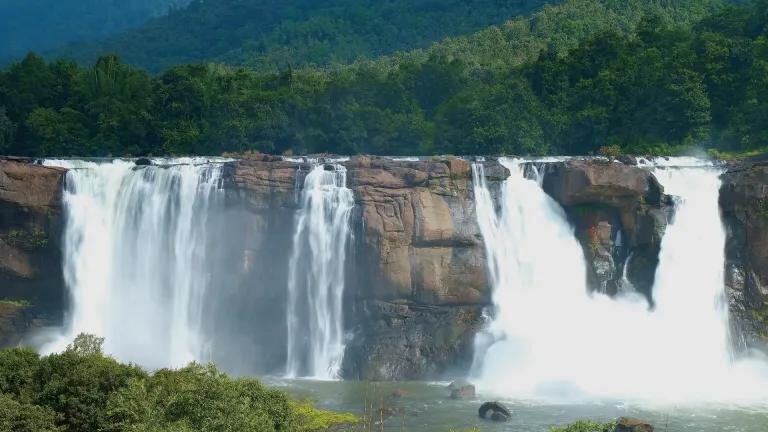
Day 4 — Athirappilly or Alleppey. Either the thundering falls near
Thrissur (best in and after the monsoon), or straight to the backwaters.
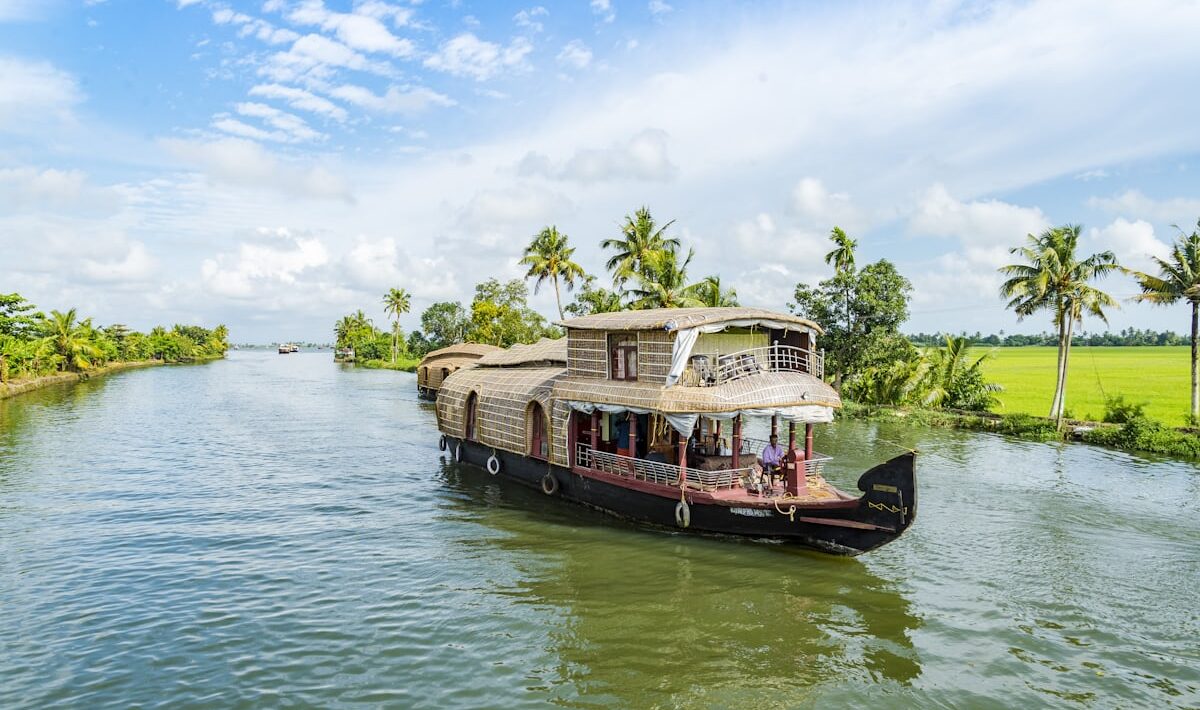
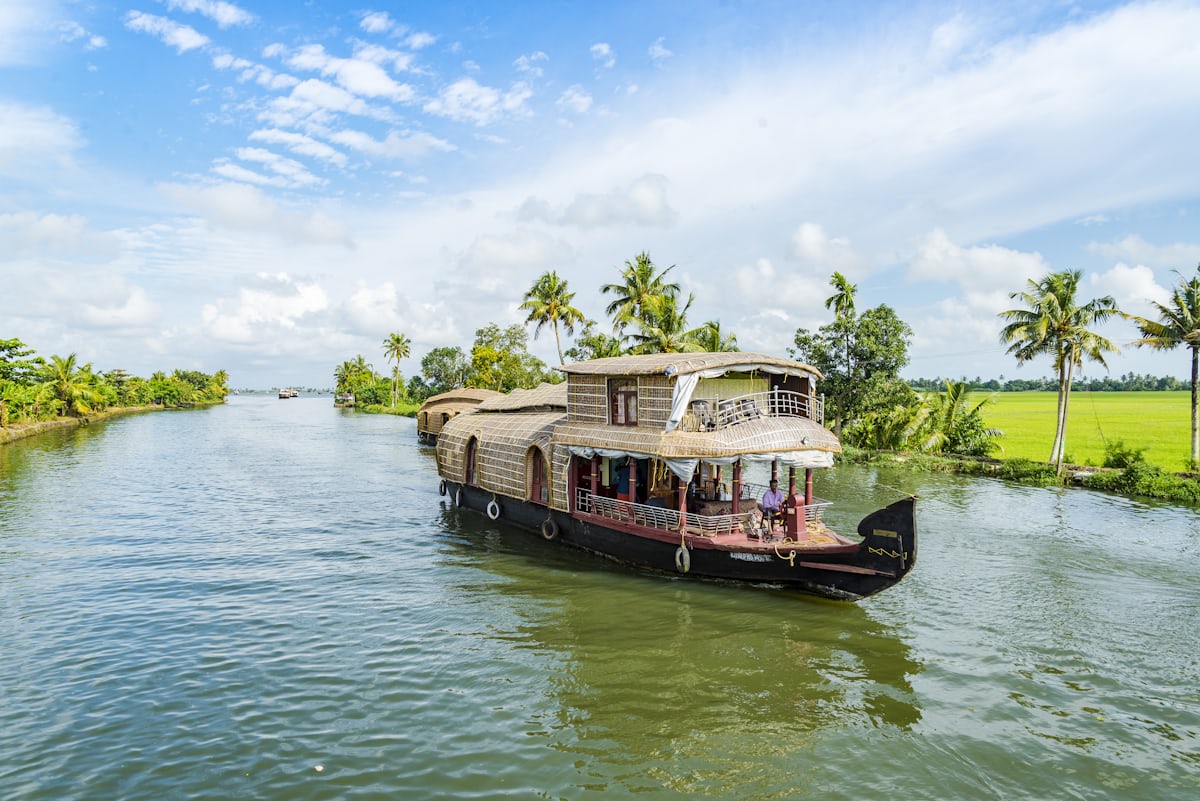
Day 5 — Alleppey (Alappuzha). A night on a traditional houseboat through
the palm-fringed backwaters.
Day 6 — Varkala. Down to the dramatic red cliffs above the Arabian Sea —
and the start of your Ayurveda programme.
Day 7 — Varkala or Kovalam. A final restorative day: Ayurveda, yoga, and
the sea, before departing from nearby Thiruvananthapuram.
Route B — Northern Kerala & Theyyam (7 days)
From roughly October to May it’s Theyyam season in the north, and seven days
lets you experience it properly and still touch the south. Land at
Kannur (CNN), right in Theyyam country:

Day 1 — Kannur. Settle in and attend your first Theyyam.
(Our PDF carries the stories behind the forms you’ll see — so you understand the culture, not
just the colour.)
Day 2 — Bekal Fort & the north coast. The great seaside laterite fort,
quiet beaches, and a second Theyyam if the shrine calendar allows.
Day 3 — Valiyaparamba backwaters. Houseboats through a chain of islands,
with barely another tourist in sight.
Day 4 — Wayanad. Into the green hills — forests, wildlife, and the north’s
own roaring waterfalls.
Day 5 — Wayanad to Kochi (via Kozhikode). A scenic descent south; evening
Kathakali in Kochi.
Day 6 — Alleppey. With seven days you can add the famous southern
backwaters — a houseboat night to round out the trip.
Day 7 — Ayurveda & departure. A restorative half-day near Kochi (or
continue to Varkala if your flights allow) before flying out.
Mix and match — the freedom seven days buys you
This is the real advantage of the longer trip. In five days you must choose north
or south; in seven, you can mix and match. Want the north’s Theyyam
and a night on the classic Alleppey backwaters? Now possible. Prefer to swap
Athirappilly for an extra Ayurveda day? Easily done. Want to keep the whole trip in the south
but add Thekkady and a wellness finish? That works too.
Kerala makes this easy. It’s one of India’s most tourism-friendly states —
with good roads, well-marked routes, reliable stays, and helpful infrastructure — so you have
genuine flexibility to move around and reshape the trip as you like. The pieces fit together
in many combinations; our job is to sequence whichever ones you choose so you’re never
doubling back.
Travel logistics
As with the shorter trip, the key decision is which airport you fly into.
Kochi (COK) is the natural hub for the south; during Theyyam season,
Kannur (CNN) puts you beside the rituals from the moment you land, with
Kozhikode (CCJ) handy for Wayanad and Thiruvananthapuram (TRV)
for the far south. Arriving at one airport and departing another often saves a whole day.
Within Kerala you have real choice. A private car with driver is the most
flexible way to link the hills, backwaters and coast. But the train is also a genuine
option — Kerala’s coastal railway is scenic, inexpensive and connects the main towns
(Kochi, Thrissur, Kollam, Varkala, Thiruvananthapuram, and Kannur/Kasaragod in the north), so
a mix of train hops and short drives works well and adds to the experience. Houseboats are
booked as overnight stays.
Seasonal notes
October to May — Theyyam season (north). The window for Route B, and the
coolest, most comfortable travel weather statewide.
Monsoon, roughly June to September — waterfalls, boat races & Ayurveda.
Athirappilly (south) and the Wayanad falls (north) roar,
Kerala’s snake-boat races take place around Alleppey (the Nehru Trophy falls
on the second Saturday of August), and this is the traditional Ayurveda
season — practitioners consider the cool, humid monsoon air ideal for treatment, which makes
a monsoon wellness finish especially worthwhile.
April–May — pooram season. Hot on the plains, but the great temple poorams of
central and southern Kerala are in full swing. Onam (Aug–Sep) is celebrated
across the whole state.
Pros & cons
Pros: Seven days is the sweet spot. You get culture and calm, the
freedom to mix north and south, and a proper Ayurveda wind-down rather than a token one. The
pace is relaxed, distances stay manageable, and Kerala’s tourism-friendly infrastructure
gives you flexibility to adjust as you go.
Cons: With more ground on offer, it’s tempting to overpack the route —
resist it; Kerala rewards slowing down. A mixed north-and-south trip involves one longer
transfer leg (which the train can make pleasant rather than tiring). And a monsoon trip
trades guaranteed sunshine for roaring falls and boat races, so set expectations by season.
Daily culture: Kathakali, wherever you go
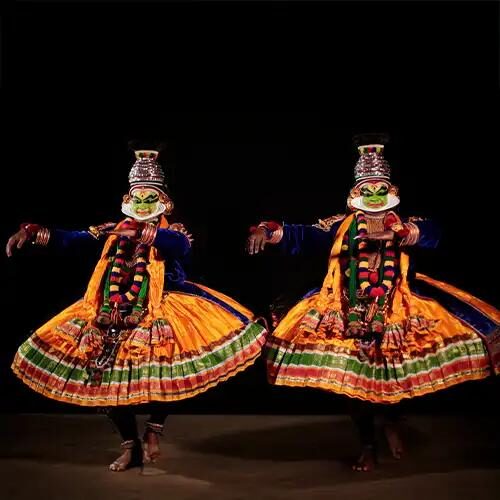
Kochi, Thekkady and Munnar all host Kathakali on a
near-daily basis — usually two to three hours that showcase the astonishing richness of
Kerala’s culture, from the hour-long application of makeup to a single expression held on a
performer’s face. With seven days you can comfortably see more than one, and pair it with
Kalaripayattu (Kerala’s ancient martial art) in Thekkady or Kochi.
A note we take seriously: many Kerala temples admit only Hindus, and
some have a dress code. We plan around this respectfully — steering you to the wealth of
experiences open to every visitor, and being upfront about the few that aren’t.
Typical costs
A comfortable mid-range seven-day Kerala trip generally runs about $600–$1,300 per
person, covering transport, mid-range hotels, one or two houseboat nights, an
Ayurveda programme, and entries. A houseboat night ranges from roughly ₹8,000 to
₹20,000 ($100–$250); a multi-day Ayurveda package varies widely by centre and
length. Train fares between towns are very inexpensive (often a few hundred rupees).
Kathakali tickets are modest (₹300–₹500); Theyyam is free, being a temple ritual, not a show.
These are ballparks — actual bookings are made by you or your agent.
Local guides & experiences
A good local guide brings Fort Kochi’s history alive and — especially — a Theyyam night, where
knowing what you’re witnessing is the difference between a spectacle and an understanding. We
can point you to reputable guides, photo-walk hosts, Ayurveda centres and Kathakali venues,
and connect you directly where you like. Government-approved guides are available in the main
centres at modest cost.
Plan with Travebrate
A seven-day Kerala plan is a set of choices — north or south or a mix, culture or calm, car or
train, festival or wellness — and the right answer depends on your exact dates. That’s what we
do. We’re India trip planners based in Udupi, Karnataka, and our edge is the festival and
ritual calendar: we track the dates so you land in the version of Kerala that’s most alive
while you’re there.
The honest shape of it: we have two calls to understand what you want and the
season you’re travelling in. We show you options tuned to your dates, and
you decide — nothing is a push from us. We plan in the mode you choose, then
deliver a day-by-day PDF itinerary carrying the stories behind what you’ll
see — who the Theyyam gods are, why the pooram drums matter — so you understand the culture,
not just watch the colours. You then hand that PDF to an IATA-approved travel agent of
your choice, or book it yourself. We don’t book flights or hotels —
staying independent keeps every recommendation about your experience, never a commission.
And because we know the whole southern calendar, we might suggest a short hop beyond Kerala if
your dates line up — the Kambala buffalo races in coastal Karnataka near our
Udupi base, Jallikattu in Tamil Nadu, or, if you travel in December, the
Margazhi music-and-dance season around Thanjavur’s Brihadeeswara Temple.
Never a push — just what we’d tell a friend who happened to be here that week.
Our Kerala itinerary planning fee is a flat USD 100.
Plan your 7-day Kerala trip
Tell us your travel dates and what you’re after — Theyyam, backwaters, tea hills, Ayurveda,
or a mix — and we’ll build the seven days around it, timed to the season.
Plan my Kerala trip on WhatsApp
Book a planning call →
Custom Kerala itineraries from USD 100 · We craft the experience; you book the trip your way.