

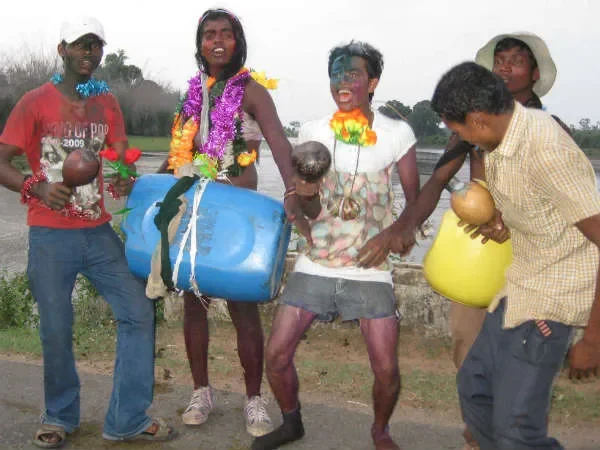
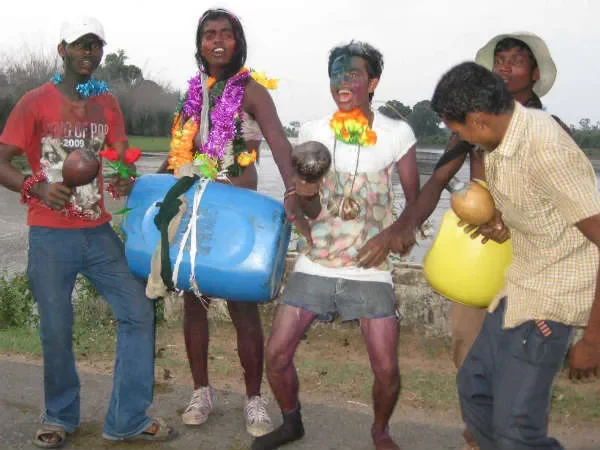
Deep within the coffee-scented valleys of Coorg (Kodagu), where traditions are fiercely guarded and ancient rhythms still dictate daily life, lies one of the most raw, provocative, and culturally profound tribal festivals in India.It isn’t a festival of serene chants or solemn quietude. Instead, it is a glorious, chaotic, and cathartic riot of cross-dressing, public roasting, and unapologetic subversion.Welcome to Kunde Habba—the festival where gods, landowners, and passing travelers are systematically targeted with crude insults for two whole days, only for the entire community to bow down in deep, tearful apology as the sun sets on the final evening.
Decoding the Name: Language as a Weapon of Subversion
To truly understand this festival, one must look at the name itself. In mainstream Kannada, the word ಕುಂಡೆ (Kunde) translates literally to “buttocks” or “anus,” and is commonly used as a vulgar slang term.Shouting this word publicly is a deliberate, shocking breakdown of social taboos. For the indigenous Jenu Kurumba and Yerava tribal communities of Coorg and neighboring Mysore regions, using this raw language is a powerful equalizer.The tribal workforce spends 364 days a year navigating a strict socioeconomic hierarchy on coffee plantations, maintaining a submissive posture before employers and landowners. But during Kunde Habba, that entire structure is flipped on its head. Liberated by elaborate disguises (frequently featuring men cross-dressing in vibrant, eccentric women’s attire) and local spirits, they march through the streets chanting the word relentlessly.No one is exempt from the shock value. The plantation owners, the local elite, tourists, and even the highest deities are targeted with cheerful, explicit, and unrestrained fury. It serves as a vital social safety valve—a culturally sanctioned pressure cooker release that allows accumulated systemic frustration to vent completely, making the rigid structures of daily life bearable for the rest of the year.
When is Kunde Habba Celebrated in 2027?
Kunde Habba is deeply tied to the natural calendar of the Western Ghats. It takes place annually during the pre-monsoon period, typically in mid-to-late May.
Kunde habba is celebrated on 27th of May in 2027.
The timing aligns with a crucial transitional phase in nature. The summer heat is breaking, the first pre-monsoon showers are touching the hills, and the forest wildlife enters its mating season. The unfiltered, raw expression of human emotion and primal language during the festival is also an ancestral nod to mimicking the untamed, uninhibited rhythms of the wild forest before the heavy monsoons confine everyone indoors.
The Ritual Journey: From Absolute Chaos to Devout Surrender
The Ritual Journey: From Absolute Chaos to Devout Surrender
The Street Procession and ‘Taxation’
Gathering from various hamlets across Coorg and Mysore (such as H.D. Kote and Hunsur), the participants journey toward the epicenter of the festival: Devarapura near Gonikoppal.Armed with traditional gourds (sorekayi burude), sticks, and plastic drums, they march through the streets chanting the rhythmic refrain, “Kunde… Kunde… Kunde!” If a bystander or traveler gives them a small monetary offering, they are praised as an “Olle Kunde” (a good entity). If someone refuses, their social status and dignity are hilariously and mercilessly dismantled on the spot through explicit public roasting.
The Meeting of Cultures at Ayyappa Temple
By afternoon, the energetic crowds converge at the sprawling grounds of the Devarapura Ayyappa Temple. Here, the tribal celebration seamlessly weaves into the broader Kodava cultural fabric. Under the traditional leadership of the local Sannuvanda family (a prominent Kodava ancestral house), the solemn religious rituals begin. The idol of Goddess Bhadrakali is brought from the nearby Ambala (sacred platform) mounted on a wooden horse to meet Lord Ayyappa, accompanied by intense folk dances and those fulfilling sacred vows.
The Grand Apology: A Moving Transformation
The true magic of Kunde Habba reveals itself in its final hours.As dusk approaches and the heavy intoxication begins to clear, a profound shift occurs. The wild, defiant energy dissolves into intense reverence. The very same men who spent forty-eight hours screaming obscenities at the heavens walk quietly into the inner sanctum of the Bhadrakali and Ayyappa temples.With folded hands, bowed heads, and absolute sincerity, they lay down their sticks and gourds to beg the deities for forgiveness. They apologize for every harsh word spoken, every taboo broken, and every insult hurled. The gods, having patiently listened to the unfiltered pain and joy of their children, are understood to grant complete absolution.The air clears, the masks are removed, and a profound, quiet peace returns to the green hills of Coorg.
Plan with Travebrate
Planning an immersive journey to explore the lesser-known cultural landscapes of the Western Ghats? Connect with our experiential travel designers to discover the living heritages of Southern Karnataka.