

Updated July 2026 · Dates verified for the 2026–27 festival season
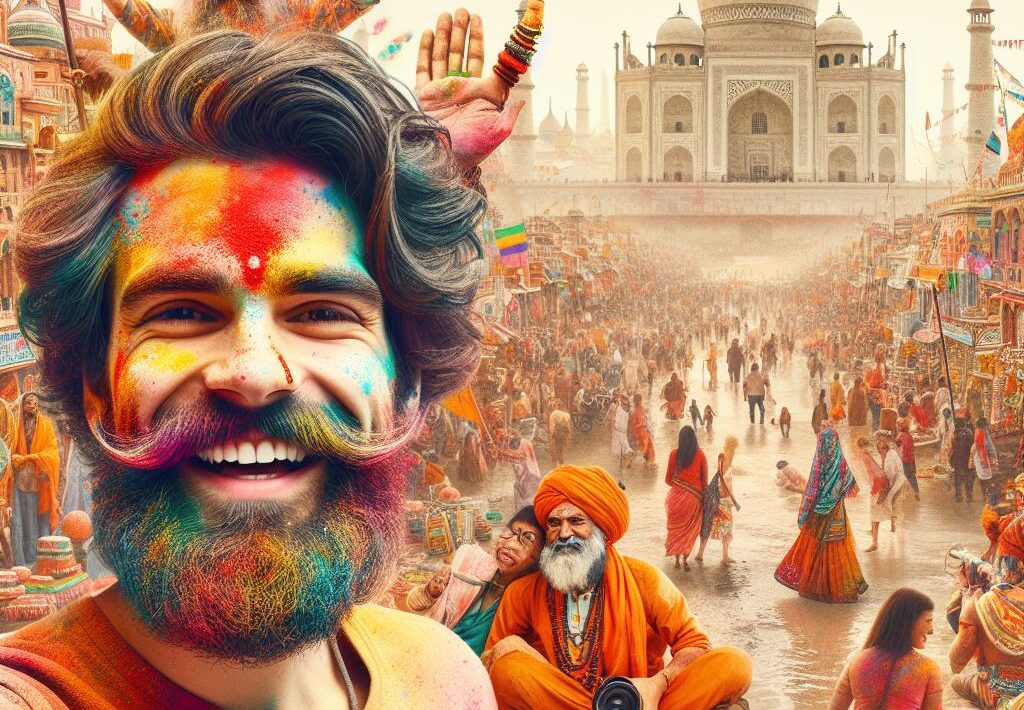
Ask most people to name an Indian festival and you’ll hear two words: Diwali, or Holi. But India is a country of over 300 festivals — and the ones you’ve never heard of are often the most extraordinary. This is a land so alive with colour and ritual that even its races aren’t run with horses. The best time to visit India isn’t a single season. It’s whenever the festival that speaks to you is happening. Here’s how to think about timing your trip — and where to look next.
The Golden Triangle will always be worth doing. But beyond it, at any given moment, there are colours of India unfolding before crowds of a few thousand to many millions — festivals that most of the world, and even much of India itself, has never heard of, simply because the country is so vast. As festival-travel experts of India, that’s what we bring you here.
Browse every festival we track, with dates, on our full sitemap — or explore the Festive Posts. And follow us on Instagram to know what’s happening before a festival begins — so you can be there for it, rather than scrolling through everyone else’s photos after it’s over.
The best months for festivals: October to March (and January)
If you’re building an India festival itinerary, the richest stretch runs from October through March — cool, clear weather across most of the country and a near-unbroken run of celebrations. Here’s the month-by-month shape of it:
- October — Dussehra season. The regal Mysuru Dasara with its illuminated palace and elephant procession, and the dramatic painted performers of Kulasai Dasara in Tamil Nadu.
- November — the peak. Diwali, then Dev Diwali in Varanasi, and the Pushkar Camel Fair — with Dev Diwali and Pushkar both climaxing on the same Kartik Purnima full moon (24 November 2026).
- December — the Rann Utsav in the white desert of Kutch, the Margazhi music-and-dance season in Chennai, the first Theyyam rituals of the season in North Kerala, and Kambala buffalo races in coastal Karnataka.
- January — Jallikattu bull-taming in Tamil Nadu (Pongal season), Kambala around Udupi, and Theyyam in full flow across North Kerala.
- March — the great Holi season in all its regional forms, and Kerala’s elephant race, Aanayottam.
That’s the backbone. But within each month sits a whole world most travellers never see — so let’s go deeper.
A country where even the races are festivals
India recently raced to become the world’s fourth-largest economy — but racing, here, has always meant something older and stranger than markets. It isn’t only horses that run:
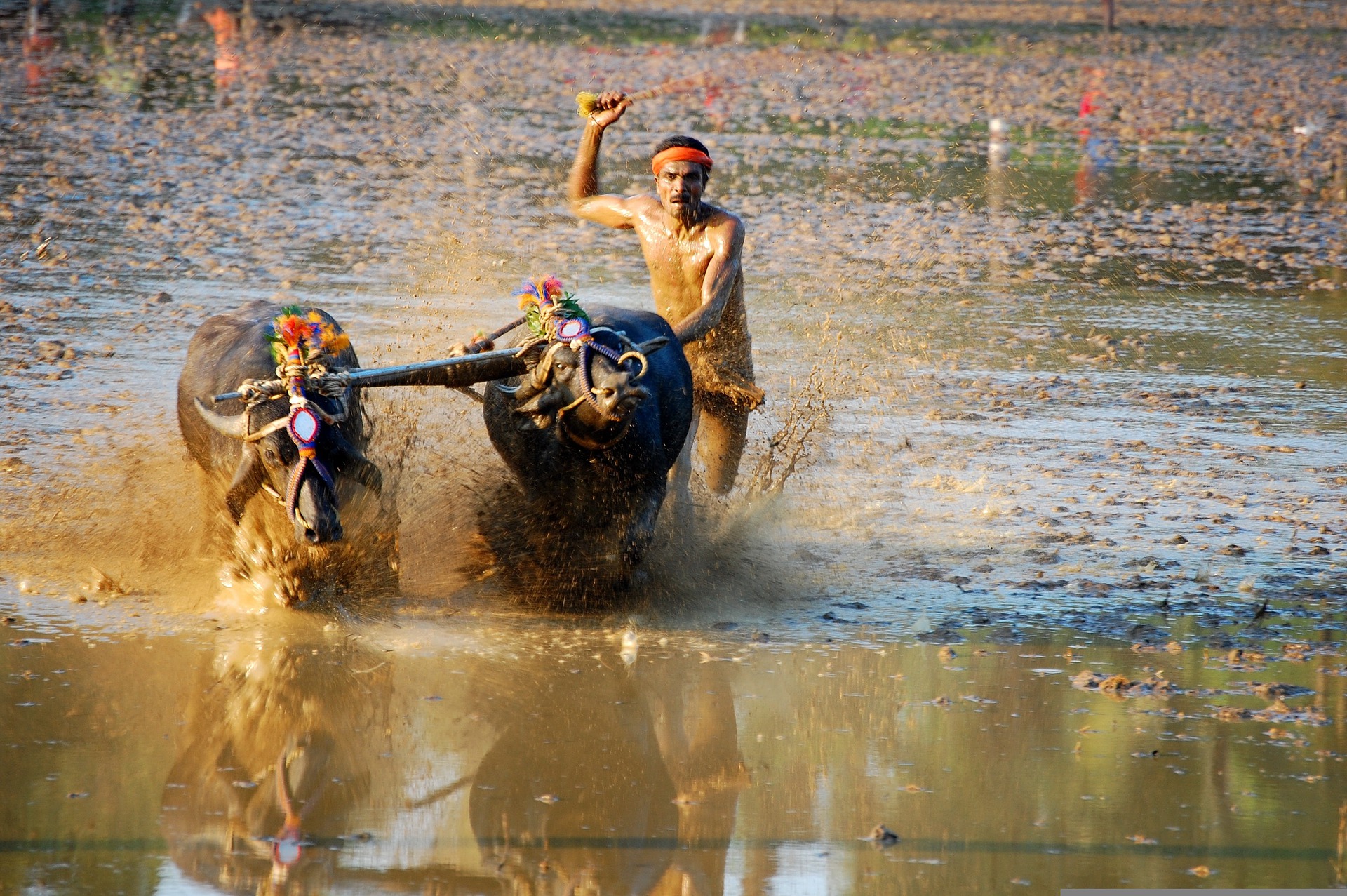
- Buffaloes race through flooded paddy fields in coastal Karnataka — a thundering, mud-soaked sport called Kambala.
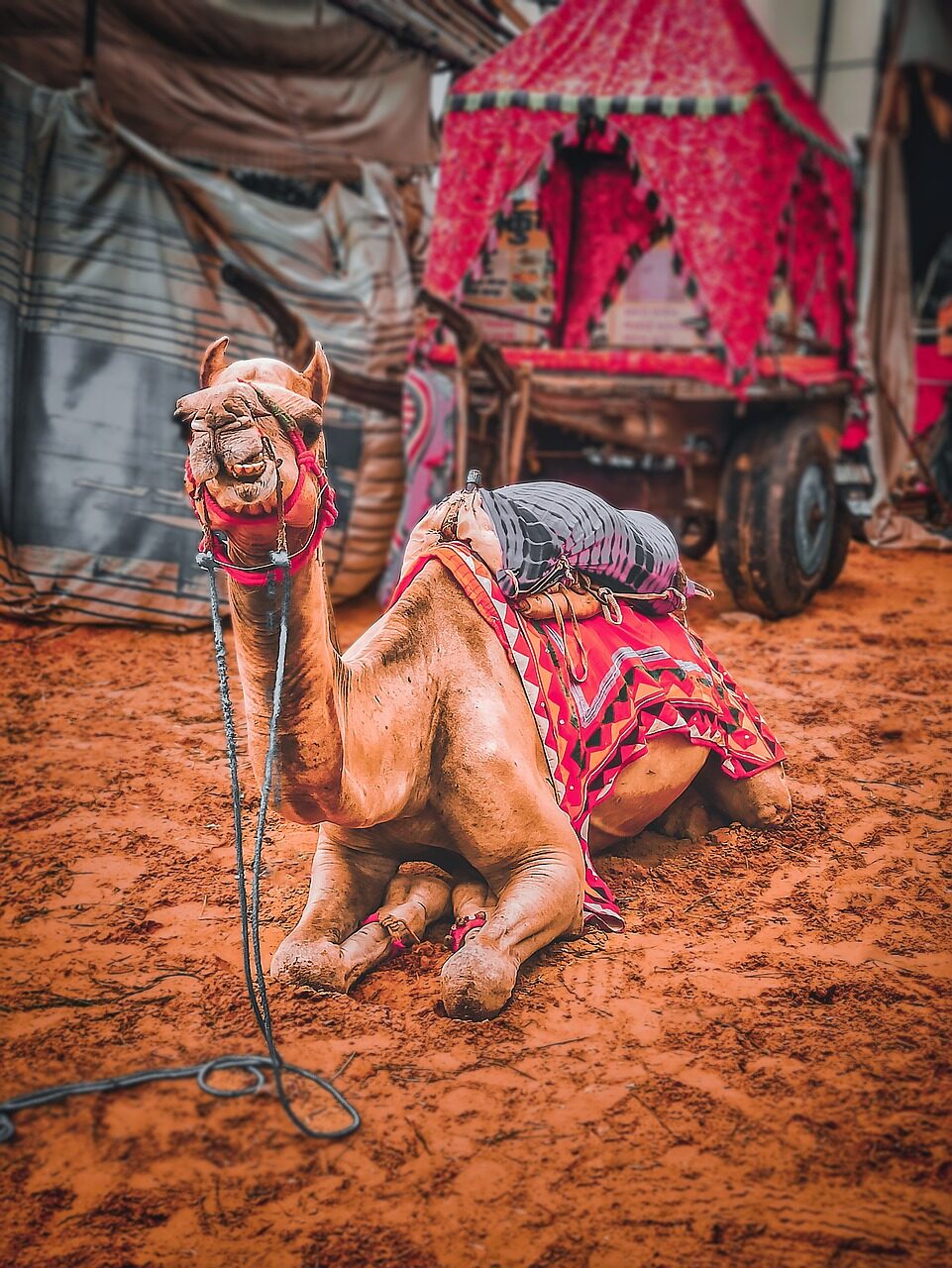
- Camels race across the Rajasthan desert at the Pushkar Fair.
- Elephants race in Kerala at Aanayottam — and the winner earns the sacred honour of carrying the idol of Guruvayurappan in the temple procession for the entire year that follows.
Then there are the bulls. In Tamil Nadu’s Jallikattu, a person tries to hold onto the hump of a charging bull — and more often than not, the bull wins, refusing to let anyone even touch it. Spectators watch from safety. But at Manjuvirattu, the bulls run loose all around you while you watch from an open four-wheeler in the thick of it.
For a first-time visitor, these can raise a question: why involve the animals at all? It’s a fair question — and the answer only comes when you hear the story. These bulls, these buffaloes, these elephants are the pride of the families who raise them. When tractors arrived, these farmers didn’t send their animals to the meat market in exchange — they kept them, cared for them, and this is how they play together, human and animal, once a year. Sit with us and hear that story, and the spectacle becomes something else entirely. That’s the difference between watching a festival and understanding one.
Holi is not one festival — it’s ten
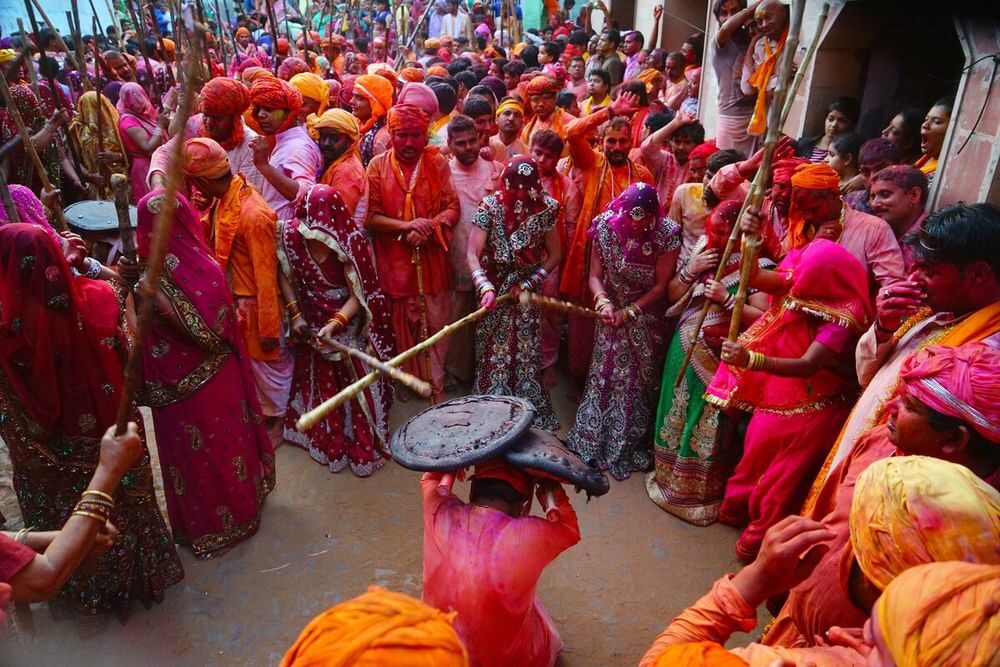
Take the festival everyone thinks they know. Holi isn’t a single day of colour — it begins ten days before the main day and, in the Himalayas, doesn’t end until nearly a week after. And each Holi is a different experience:
- In Barsana, women playfully drive away men from the neighbouring village with sticks, colour clouding the air — and the next day, the men of that village get their turn.
- Sangla Holi unfolds high in the Himalayas, played against snow instead of streets.
- And Raulane in Kinnaur — search it on Instagram, and you may not come back to finish reading this. It’s that unlike anything else.
So the question isn’t “when is Holi.” It’s which Holi, and how you want to experience it. Out in the public throng at Jaipur? Or a bespoke Holi arranged in a resort or hotel for a smaller group — slightly pricier, but calmer and safer, which matters if you’re a solo woman traveller or want something gentler for your group? Both are wonderful. They’re just different, and the choice is yours.
Diwali, and the lights that follow it
Diwali celebrates the return of Lord Rama to his home city of Ayodhya after defeating the demon king Ravana. And Ayodhya honours that homecoming like nowhere else — close to two million lamps lit along both banks of the Sarayu river, a sight that overwhelms the eye. Jaipur, too, is magnificent for Diwali.
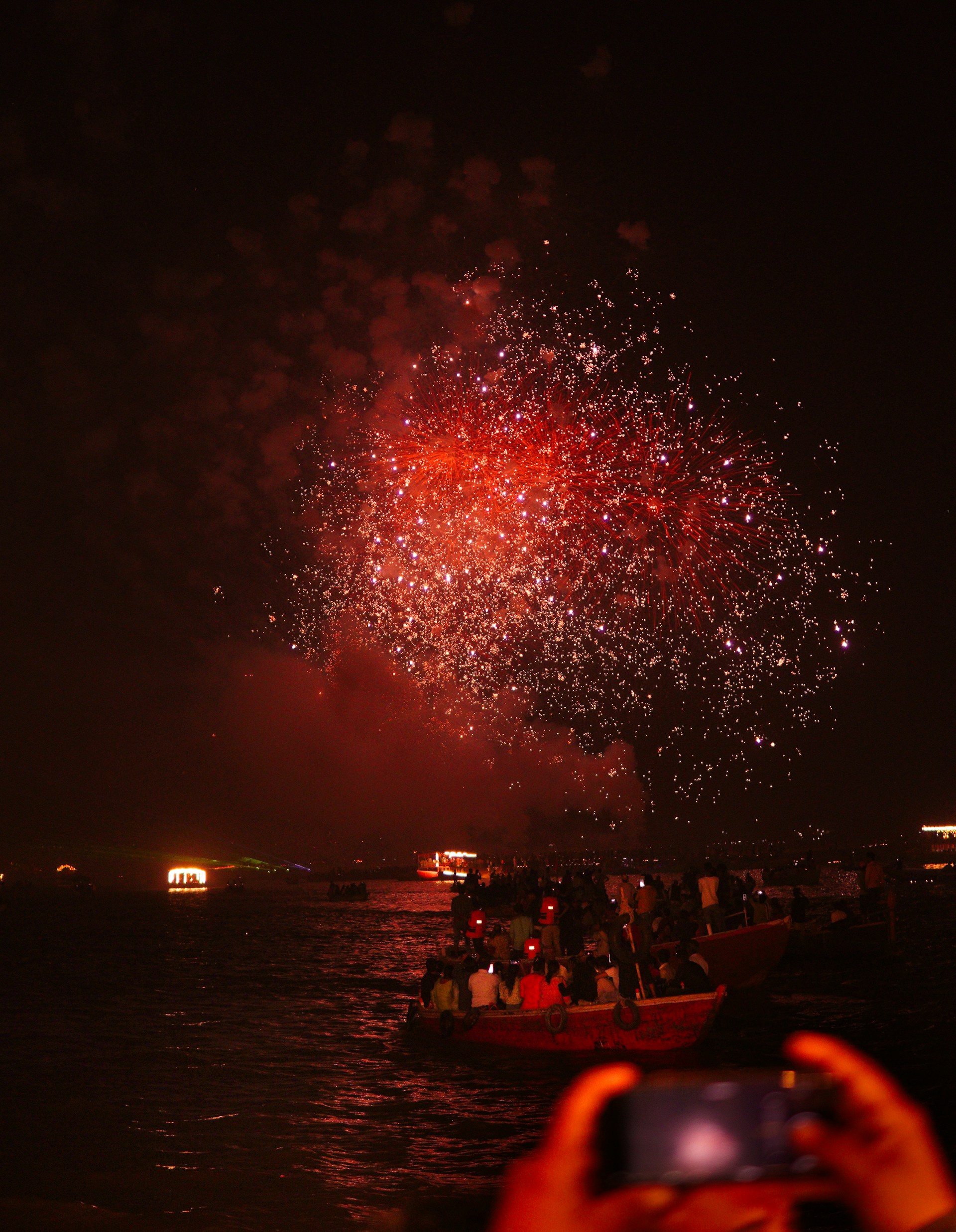
But here’s what most travellers miss. Exactly fifteen days after Diwali, the city of Varanasi stages Dev Diwali — a similar spectacle of light, but set against the Ganga, with a world-class fireworks display and a sea of over two million people. Few festivals on earth can match it.
Why late November 2026 is the sweet spot
Here’s a piece of timing intelligence worth planning around. In 2026, Dev Diwali in Varanasi and the Pushkar Camel Fair end on the very same day — Kartik Purnima, 24 November 2026. That means the last two weeks of November 2026 let you capture both of these once-in-a-lifetime festivals — plus a full-moon night at the Taj Mahal — without straying far from the classic Golden Triangle route. It’s the rare window where the festival calendar and the first-timer’s itinerary line up perfectly.
Even the “off season” has its own magic
Think July is the wrong time to visit India? Think again. It’s when Odisha hosts the Rath Yatra — the great chariot festival, where half a million devotees haul three towering wooden chariots through the streets of Puri. And in the Northeast, the monsoon months bring some of India’s best rock and music festivals, a completely different, contemporary side of the country. There is no truly wrong time to visit India — only different Indias, depending on when you come.
Water: the great gatherings by the rivers
Some of India’s largest festivals happen at the water’s edge — and 2027 is a rare year that holds two Kumbh Melas, the largest peaceful gatherings of humans on earth. Early in the year, the Haridwar Ardh Kumbh runs on the Ganga (14 January–20 April 2027). Later, the Nashik Simhastha Kumbh gathers on the Godavari, with its peak bathing days through the middle of 2027. Millions of pilgrims, thirteen ascetic Akharas, Naga Sadhus, and the sacred royal baths — to witness a Kumbh once is to never forget it.
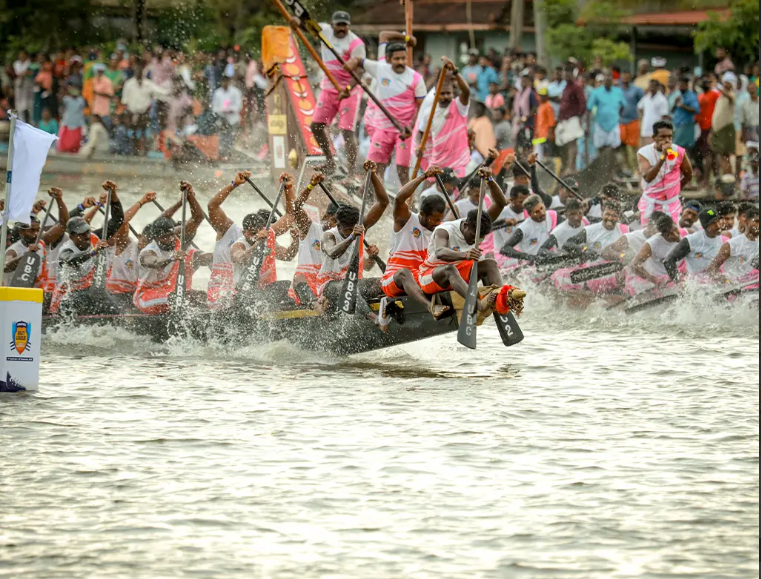
Water turns to sport in Kerala. During the monsoon and harvest months, the backwaters host the electrifying snake boat races (Vallam Kali) — hundred-foot canoes carved from a single tree, each powered by up to a hundred rowers pulling in unison to the beat of the vanchipattu boat songs, while tens of thousands roar from the banks. The Aranmula and Nehru Trophy races are the most famous, and few sporting spectacles anywhere match their rhythm and scale.
Deserts: the sands come alive, November to March
As the north cools, Rajasthan’s deserts fill with festivals. Between November and February, the desert towns each host their own celebration — Pushkar, and the desert festivals of Jaisalmer and Bikaner among them — with camels, folk music, turban-tying contests, and moustache competitions against a backdrop of golden dunes and forts.
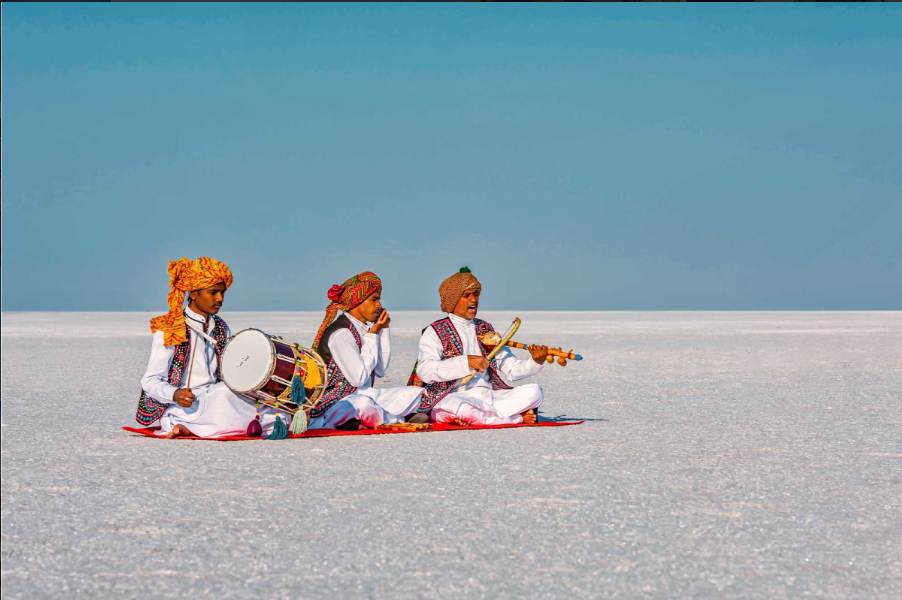
And across the border in Gujarat, the Rann Utsav stretches the season even longer — running from November all the way to March across the white salt desert of Kutch, one of the most surreal landscapes in India.
Masks and painted faces: when humans become the divine
If there is one thread that reveals the depth of India’s festival culture, it’s this: the traditions where performers become something else entirely — through masks, or through paint.
The mask festivals. In the high Himalayan monasteries, monks perform the Cham dance — swirling, masked ritual dances that enact the triumph of good over evil (follow our Instagram for these). Near the Odisha–West Bengal border, the athletic, acrobatic Chhau dance tells mythological stories through masked, martial movement.
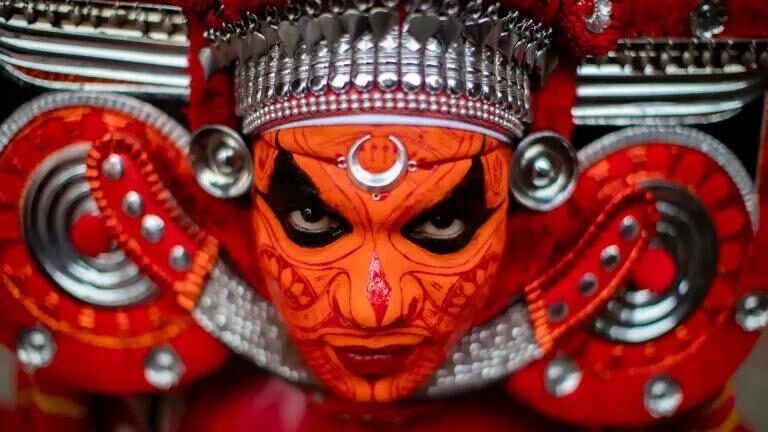
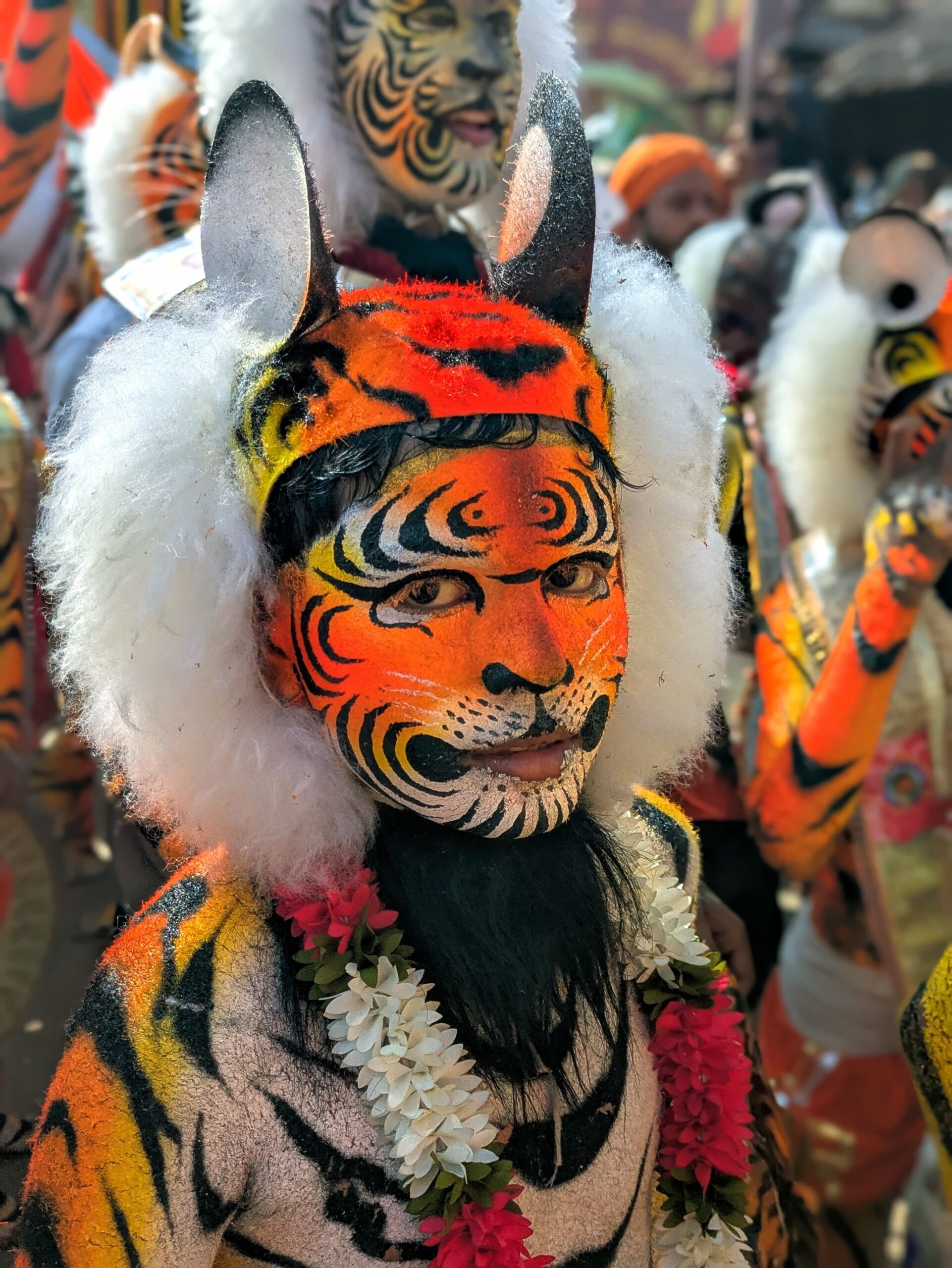
The painted-face traditions. Where the face itself becomes the canvas for divine energy, a whole other world of festivals opens up. Theyyam in North Kerala, where a performer painted and costumed over hours is believed to become the deity, and devotees seek his blessing. Bhootha Kola in coastal Karnataka, the intense overnight spirit-worship ritual. And Kulasai Dasara in Tamil Nadu, with its dramatic painted performers.
And close to our own home in Udupi, the day after Janmashtami brings one of India’s most joyfully colourful festivals — Krishna Leelotsava, where the streets fill with Huli Vesha, the tiger dance: performers painted head to toe as tigers and demons, leaping to the beat of drums. It’s a hometown favourite, and exactly the kind of thing we love showing travellers who’d never have found it alone.
So — when should you visit?
The honest answer: it depends on which India you want. The colour-soaked chaos of Holi, or the lamps of Diwali and Dev Diwali. The desert camels of Pushkar, or the temple elephants of Kerala. The public celebration, or the quiet bespoke one. That’s exactly what we help you figure out. We track over 300 festivals across the year, we’re on the ground for them, and we build your itinerary around the right moment — telling you the stories behind what you’re seeing, so you understand the culture rather than just watch it. We don’t book your flights or hotels; we craft the plan and you book it your way. Our personalised itinerary is a flat USD 100.
Frequently asked questions
What is the best time to visit India for festivals?
October to March is the richest festival stretch, with cool, clear weather across most of the country. October brings Dussehra, November peaks with Diwali, Dev Diwali and Pushkar, December and January carry Rann Utsav, Kambala, Theyyam and Jallikattu, and March is Holi season. If you want a single high point, the last two weeks of November are hard to beat.
Can I plan a whole trip to India around a festival?
Yes — and it’s one of the most rewarding ways to travel India. The key is timing: festival dates shift each year across the lunar and solar calendars, and many of the best celebrations sit in small towns reachable only with planning. We build itineraries around the festival you choose, weaving in the Golden Triangle or other regions so the trip flows naturally.
Which Indian festival is best for first-time tourists?
For most first-timers, Holi (March) and Diwali/Dev Diwali (November) are the easiest to enjoy and the most spectacular. The Pushkar Camel Fair is a superb, photogenic introduction to Rajasthan. If you want something rarer, the temple elephants of Aanayottam, the Theyyam rituals of North Kerala, or the Rann Utsav in Gujarat reward the more adventurous.
Is Holi safe for tourists, especially solo women travellers?
Holi is joyful but can get boisterous in large public crowds. Many travellers, particularly solo women, prefer a bespoke Holi arranged at a hotel or resort for a smaller group — calmer and safer, if slightly pricier — while others love the energy of a public celebration in a place like Jaipur. Both are wonderful; the right choice depends on your comfort level, and it’s something we help you decide.
How far in advance should I plan a festival trip to India?
Aim for a few months ahead. Festival periods are peak travel season, so accommodation and transport fill up and prices rise — and some experiences (a full-moon Taj Mahal viewing, a Kumbh bathing day, an Inner Line Permit for Himalayan Holi) need arranging weeks in advance. The earlier you lock your dates, the more the itinerary can be built around exactly the right days.
Isn’t travelling India during festivals overwhelming?
It can be, if you arrive unprepared into a crowd of hundreds of thousands with no plan. That’s precisely what good planning solves — knowing which day to be where, where to stand, when the crowds peak, and the story behind what you’re seeing. With the logistics handled, the overwhelm turns into wonder.
Why plan your festival trip with Travebrate
We’re Travebrate — India trip planners based in Udupi, Karnataka, founded by Harshitha Bhat. Our whole craft is timing. We track over 300 of India’s festivals and seasons and we’re on the ground for them, so we can place you in the right town on exactly the right day — and tell you the story behind what you’re seeing. As we put it: the destination comes second; the experience comes first.
It’s an approach the press has taken note of. Travel + Leisure Asia featured our founder on how travellers now plan around festivals like Theyyam and Kambala; Cali Weekly quoted us on why local, on-the-ground knowledge beats generic AI itineraries; and News18 pointed its readers to Travebrate for the details of a hill-shrine festival few had heard of. You can see where we’ve been featured on our press page.
Here’s how planning with us works:
- Two calls. We learn what you love — colour, ritual, calm, crowds, food, photography — and when you can travel.
- A menu of India. We show you what’s happening during your dates — festivals, prime seasons, hidden gems — and you choose.
- Your PDF itinerary. A day-by-day plan you book yourself or hand to a travel agent of your choice.
We don’t book your flights or hotels, and we earn no commissions — staying independent keeps every suggestion about your experience, never a kickback. One personalised itinerary, a flat USD 100, and you book the trip your way.
Find your festival, find your dates
Tell us what moves you — colour, ritual, music, the races, the quiet or the crowd — and we’ll build an India itinerary timed to exactly the right festival.
Plan my festival trip on WhatsApp Plan your India trip →Custom India itineraries from USD 100 · We craft the experience; you book the trip your way.
India’s festivals follow both the lunar and the solar calendars — which is exactly why their dates shift and confuse. Tracking them across both is our craft; we keep our festival pages updated so you don’t have to work it out.